




Back to www.moviemem.com

Australian Movie Posters

Copyright John Reid (2005)


Updated: 22nd May 2005

jPlease note: This page is evolving with time. I am hoping to compile a comprehensive list of the printers of Australian posters from the 20s on. The list will surprise many of you because there have been many more printers than the widely known W.E.Smith, Robert Burton and M.A.P.S.Any information that is supplied on this site is given to the best of my knowledge and I will be adding more information and links regularly Any comments or suggestions would be appreciated. At some point in the future, I will add some information on Australian poster artists and add more images.


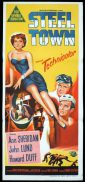
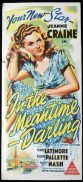
Posters released for the Australian market consisted mostly of daybills and one sheets, although 3 sheets, six sheets and 24 sheets were also printed in small quantities. US Lobby cards were generally available to cinemas but occasionally Australian lobby cards were printed (read on for more information). A variety of US and British posters were also occasionally used in cinemas, including US door panels. Many vintage Australian posters were printed using the Hand Litho process resulting in a rich texture of colour and subtle tonings with artwork that was often unique to Australia. The stone litho process was also occasionally used. The daybill has become increasingly popular over the years because of its suitability for framing and display. The foldlines are not as noticeable on daybills unlike one sheets or foreign posters. Most daybills were printed in the vertical format with the exception of a handful of titles in the horizontal style (read on for more details of horizontal daybills).

Many have asked for a definition of the Hand Litho process. I recently spent some time with an ex employee of the firm Robert Burton Pty Ltd., one of the most familiar printers of Australian posters. He gave me an insight into how Australian posters were produced in the 60s and 70s.

He recalls that all Australian posters that were printed by Robert Burton were hand drawn and hand lettered. The artists would use a black litho crayon and produce the image directly onto the plate. They would generally have US poster art or pressbook images available. They would either trace or use their own imagination, or a combination of both to come up with a design. Images would be drawn in shades of grey. Most posters were generally printed from 3 or 4 colours using a separate plate for each colour. The poster would be first passed through the plate producing a black and white image. It would be passed through the machine an additional time for each colour. When the posters were printed the plates would be cleaned and reused - no original art would be saved. The paper used would be shiny on one side and rough on the other to accept the litho printing.

One of the poster artists for Robert Burton was Babs McDougall, who in keeping with her colourful name was apparently quite a character. Her son David Seton went on to start M.A.P.S litho printers. Bob and Elsa Burton ran Robert Burton printers with chainsmoking Elsa calling the shots. A few of the artists for Robert Burton were said to be fond of a drink and there were times when the poster art reflected the level of hangover of the artist. Print runs for daybills could run to about 3000 in the 70s. All posters were hand folded in bundles of 20 or 25 by one woman and then sent to the distributers for release to the cinemas.

Many cinemas purchased their posters directly from the distributers. Years ago, I purchased a large collection of posters from a remote country town in North Queensland - you could well refer to it as the outback, with the town consisting of a pub, a general store, a small cinema and not much else. Most of the posters had been stored in bundles in black plastic garbage bags and somehow found their way into the roof cavity of the cinema. It must have been over 100 degrees Fahrenheit up there each and every day but the posters were all in great condition when they finally came to me, many years later. I found an old invoice dated late 1972 in one of the garbage bags from United Artists (Australasia) Pty Ltd addressed to the manager. The account was for various posters that had been purchased. The manager had ordered posters for Diamonds are Forever, Barquero, Guns of the Magnificent Seven and some others. It is interesting to see how long it took for some movies to reach the country towns but even more interesting to see the prices that UA charged the cinema for posters.

One sheet $0.60

Three Sheet $1.40

Daybills $0.10

Lobby cards, Stills and slides were available for hire only at 50 cents a pop.

The manager ordered $15.00 worth of posters including a single one sheet, 6 daybills and a 3 sheet for Diamonds are Forever. I guess that was a fairly typical order.


NB: It is important to note that, although daybills were printed in a fairly standard format, there are often some slight variances in size, particularly post 1980.


DAYBILLS:

PLEASE NOTE: Some of the examples that I have used for the printers that are listed below have links to images while others do not. I will eventually add links to all of the examples when time permits.

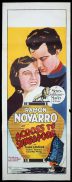
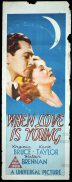
1910s - 1941 - approx. 14" x 40" with border at top for screening details. Commonly known as the "long daybill" they are very scarce but wonderful posters with striking graphics. Prominent artists in this era included Tom Ferry, Norman MacMurray, Fred Powis and Wynne Davies. Any daybill for films from this era that is not in this format is likely to be a reissue.

Jno. Evans & Son Syd 486-488 Kent St Sydney..- examples include: The Gold Rush (1925) Monna Vanna (1922) Shifting Sands (1923)

Marchant and Co.- examples include: Champagne (1927)

W.E.Smith.- Blackmail (1929)

Note: Artwork for the early W.E.Smith posters was often produced by The Richardson Studio, started by John Richardson in the early 20s and continuing up until the early 60s.

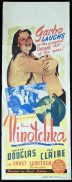
Hackett Offset - Ninotchka (1939)

Simmons Ltd - Victoria the Great (1937) For Wives Only (1926)

Paper Products Litho - The Girl Shy Cowboy (1928) Four Sons

Victory - The Country Beyond

Mathews & Co - Sunrise (1927)

F.Cunninghame - On with the Gloves


Early 1940s - approx. 10" x 30" hand lithos. Due to the paper shortage in the war years posters were printed in this narrow format for conservation purposes. Basically printers were able to print one additional poster from a single sheet. Some were printed in a duotone format. It is important to be aware that not all daybills that were produced during this era were in this format. The 13" x 30" were still being printed during these years.

Examples of the narrow format include: I Love a Soldier (1944)


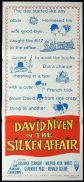
1941 - 1970s - approx. 13" x 30" Folded twice, usually Hand Lithos. Artwork was genrerlly unsigned although Frank Tyler occasionally added his distinctive signature. Printers in this era included:

W.E.Smith - examples include: Siren of Bagdad (1953) The Overlanders (1946)

The Richardson Studio produced artwork for mainly Paramount films from the 1920s - early 1960s. Various printers were used during this period: click here for examples

Advertising and Commercial- examples include:TheSpiral Road (1962)

Schey- examples include: Battle Hymn (1957)

Marchant & Co. Ltd., Offset Printers, Sydney - examples include My Gal Sal (1942) The Big Shot (1942)

Simmons - Simmons were the printers for many of the RKO titles and many of their posters were printed without borders eg Tarzan and the Huntress. examples include.: Tarzan and the Huntress(1947) Silver Lode (1954) Golden Earrings (1947) Below the Sahara (1953) City for Conquest (1940s release)

Victory- examples include: Embraceable You (1948) Night and Day (1946)

Gilprint Litho Syd - examples include You Lucky People (1955)

Lithostone Pty Ltd- examples include Keep It Clean (1956)

Offset Printing Company Sydney - examples include Hong Kong Confidential (1958)

F.Cunninghame- examples include: His Butler's Sister (1943)

Colorcraft - examples include: Reluctant Heroes (1951) Lease of Life (1954)

Chromoprint- examples include: Seven Thunders (1957) The Brothers Karamazov (1958)

Robert Burton (60s to late 70s).- examples include: Night must Fall (1964) Fireball 500 (1966) In the Heat of the Night (1967)

Royelltone:- examples include Deadfall (1968)


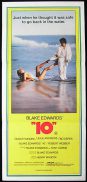
1980s - approximately 13" x 26" some shorter, some longer, glossy, similar art to USA version majority printed by M.A.P.S. NB Sizes are often slightly different, depending on the printer.

Australian Daybills were used for the New Zealand market, but they also used US and British One Sheets and US Lobby Card sets and anything else they could get their hands on. Posters used for the New Zealand market generally carry New Zealand censor stamps or stickers. eg: "G" (Approved for General Exhibition) GY, Y, R etc, etc. The Classifications have varied over the years and there are too many to list here. These markings were always added to the poster and were not part of the initial printing process. Often large sections of the poster would be blacked out due to their strict censorship laws. The most classic "mutilation by censorship" of a poster occurred with "Goldfinger" where most of the artwork has been blacked out.


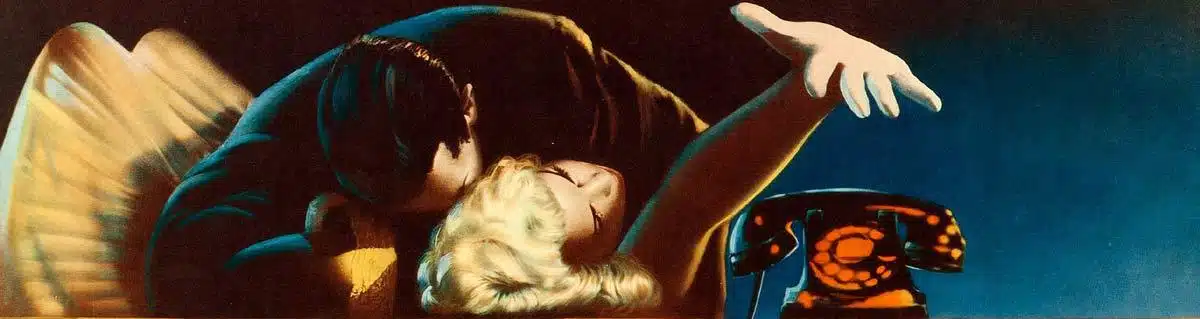
Horizontal Format daybills The vast majority of daybills were printed in the vertical format but a few titles were printed in the horizontal style. The most well known example is the Francis Ford Copplola directed "Dementia 13" aka "The Haunted and the Hunted". I am aware of only one or two others including "A View to a Kill" and "Raiders of the Lost Ark". There may also have been one or two silent daybills printed in this format.

Dementia 13


ONE SHEETS:

Generally 27" x 40" prior to 1970's usually Stone Lithos, only limited quantities printed. It is believed that as few as 200 One Sheets were printed for films up to 1950. This explains the rarity of the Australian One-Sheet. In Many cases, printers of one sheet were different to the printers of daybills and often no printing details were recorded. Printers of one sheets included:

W.E.Smith Bond of Fear (1956)

Offset Pty Ltd Syd Beyond Glory(1943 )

F.Cunninghame Kiss of Fire (1955) Hiawatha (1952)

W.F.Schey Pty Ltd The Decks Ran Red (1958)

Robert Burton The Deadly Bees (1966)


Many of the finest Australian posters have been sent to the UK or USA. Their rarity has been largely underestimated and only a handful of the choice titles are known to exist.

PHOTO SHEETS:

The Photo Sheet measures approximately 27" x 40", always glossy and an alternative to Lobby card sets. They are occasionally referred to as lobby card posters. Basically, these are similar to the centre section of the "One Stop" posters that were used for International release during the late 70s and early 80s. They occasionlly turn up always folded and feature 6 alternative scenes not normally used in lobby cards or other art. Consequently, these posters are sought after. Examples include:

Pale Rider Pale Rider (1985)

Mad Max 2 Mad Max 2


LOBBY CARDS:


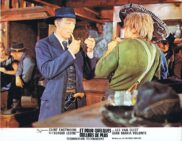
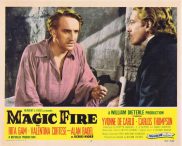
Occasionally a Lobby Card set was printed specifically for the Australian market. These were generally 11" x 14" on heavy stock card and usually black and white with artwork similar to the US versions. Lobby Card sets are extremely rare with only a very limited number printed.

Farewell My Lovely Lobby cards